

The Best AI Courses for Professionals in New Zealand: No Degree Required (2026)
You do not need a Computer Science degree to work in AI in New Zealand. What you need is the right combination of practical, vendor-backed courses that map to where AI work is actually happening, and right now that work is happening inside NZ enterprises, government agencies and consultancies that are well past the experimentation phase and hiring for delivery.
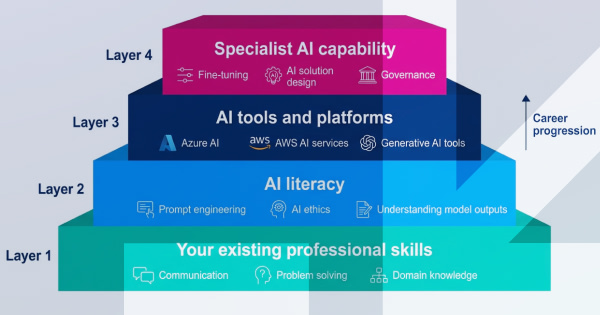
The pathway has changed faster than most career advice has caught up with. Three-day vendor certifications now open doors that used to require three-year degrees. Hiring managers who once filtered CVs by qualification are now filtering by demonstrated capability, and the credentials they recognise are increasingly the ones working professionals can actually earn while staying in their current jobs. What follows is the practical version: the courses worth doing, what each one costs, who they suit, and what tends to land in your inbox on the other side of the certificate.
The NZ AI Job Market in 2026: Why This Conversation Is Urgent
Something has shifted in the New Zealand AI job market over the past 18 months, and the data is starting to back up what hiring managers have been quietly telling each other. MBIE reporting puts the share of large NZ businesses now actively using AI at around 67%, with another body of recruitment data showing roughly 63% of organisations actively seeking AI-skilled staff. The market has tipped from "interested in AI" to "hiring for AI", and the gap between those two states matters.
It matters because the people getting hired right now are not all Computer Science graduates. They are business analysts who learned to prompt-engineer properly. Project managers who picked up enough Azure AI fluency to scope a real implementation. Marketing leads who can talk credibly about retrieval-augmented generation. The AI Forum's recent NZ Blueprint notes the same trend: enterprises are looking for what recruiters call a T-shaped profile, with deep technical capability paired with strong domain knowledge and human-centric reasoning skills.
So the question is not "can I work in AI without a degree". The question is "which course actually gets me into the room".
University vs Professional AI Courses: Which Path Fits Which Person
Both pathways are valid. Both produce people who land AI roles. They suit different situations, and the wrong choice for the wrong situation wastes either time or money.
University degrees (typically a three to four year Bachelor's in Computer Science, Data Science or a related discipline, or a one to two year Master's on top of an existing degree) are the right call if you are a school leaver, a recent graduate, or someone making a complete career pivot with the time and budget to do it properly. The depth is real. The theory is genuinely useful for research-track AI roles. The credential is universally recognised.
Professional certifications (typically one to five days each, delivered by vendors like Microsoft, AWS and AI CERTs) are the right call if you are already working, already have professional credibility in some adjacent field, and need to be productive in AI in the next quarter rather than the next four years. The depth is narrower. The applicability is immediate.
Here is the practical comparison, side by side, so you can place yourself on the grid:
Dimension | University degree | Online MOOCs | Bootcamps | Vendor certifications |
Time investment | 3 to 4 years full-time | Self-paced, weeks to months | 8 to 24 weeks intensive | 1 to 5 days per course |
Typical cost (NZD) | $35,000+ total | Free to $1,500 | $8,000 to $20,000 | $800 to $5,000 per course |
Hands-on focus | Theory-heavy with projects | Variable, often theory-led | High, project-driven | High, role-specific labs |
Employer recognition | Strong for graduate roles | Mixed, depends on issuer | Growing, varies by provider | Strong, globally portable |
Best suited to | School leavers, career pivoters with time | Curious self-learners | Career changers with budget | Working professionals upskilling fast |
Most working professionals we see at Lumify Work pick the vendor certification route, often stacking two or three courses across six months. That is not because vendor certifications are universally better. It is because they fit the rhythm of someone who is already in employment, already has bills, and needs to demonstrate new capability inside an existing role rather than restart from a graduate intake.
What 'Practical' AI Training Actually Looks Like in NZ
Three things tend to distinguish a useful professional AI course from a YouTube-funnel one. Vendor accreditation that means something to hiring managers. Hands-on labs that look like real workplace problems. And an instructor who has actually deployed AI inside a real organisation rather than just read about it.
The Microsoft Azure AI certification path remains the most popular professional pathway in NZ, and for good reason. Microsoft holds significant market share across NZ enterprises and government, so an Azure-aligned credential travels well. The entry point is AI-900 Microsoft Azure AI Fundamentals, a one-day course with no prerequisites that gets non-technical professionals fluent in what Azure AI services can and cannot do. The build-it credential is AI-102 Develop AI Solutions in Azure, a five-day, hands-on course for the developers and engineers who will actually deploy AI solutions.
Sitting alongside Microsoft, the AWS AI Practitioner Essentials course covers AI, ML and generative AI concepts on AWS in a half-day format, and is the right starting point for anyone whose organisation runs primarily on AWS infrastructure.
Then there is the AI CERTs portfolio, a vendor-agnostic certification body that Lumify Work delivers across NZ as a Platinum Authorized Training Partner. AI CERTs courses tend to be sector-specific (think AI+ Real Estate for property professionals, AI+ Learning and Development for educators and L&D teams, and AI+ Everyone for general business professionals), which is useful when you want AI training framed around your industry rather than around a cloud platform.
Mapping Lumify Work's AI Course Portfolio to Where You Are Now
The catalogue is broad, so choosing can be tricky. Here is a quick overview by starting role.
If you are non-technical and just need AI literacy
Start with AI+ Everyone or Microsoft AI-900. Both are one-day, no prerequisites, designed to demystify AI for people who do not write code. AI+ Everyone is vendor-agnostic and broader in scope. AI-900 is Azure-specific and earns you a Microsoft credential. If your organisation runs on Microsoft, choose AI-900. If you want general fluency, AI+ Everyone is the lighter lift.
If you are a developer or engineer wanting to build AI solutions
AI-102 is the credential. Five days, hands-on, builds out Azure AI Foundry, generative AI app development, AI agents, computer vision and information extraction. Lumify Work also offers Applied Skills credentials (AI-3002, AI-3003, AI-3016, AI-3026) as modular one-day components of AI-102, which is useful if you want to build credentials incrementally rather than commit to the full five days up front.
If you work in a specific sector and want AI training framed around it
The AI CERTs sector tracks are the most direct fit:
AI+ Real Estate for property professionals (valuation, marketing, compliance, smart homes)
AI+ Learning and Development for educators, instructional designers and L&D leads
AI+ Business Intelligence for analysts and BI professionals moving toward AI-augmented insight work
AI+ Everyone for general business audiences across any sector
If you want a broader data and AI grounding
Have a look at the Data and Analytics courses hub. Data fluency is the substrate that makes AI work usable, and for many professionals (especially in finance, operations and government) a stronger grounding in data is what unlocks AI rather than the other way around.
NZ Career Paths and Salaries After AI Training
What does the other side of the certificate actually look like in New Zealand? Here is the honest picture, drawn from current 2026 NZ market data.
AI Engineer roles in NZ pay an average of NZD $141,784 according to ERI SalaryExpert's 2026 NZ data. Machine Learning Engineer roles sit slightly higher at around NZD $152,000. Levels.fyi puts the median ML/AI software engineer salary in Auckland at NZD $147,139. These are senior roles, typically requiring three to five years of relevant experience, but the entry roles feeding into them (AI-aware product owners, AI business analysts, MLOps engineers in junior positions) start meaningfully above the broader IT salary band.
Geographically, Auckland and Wellington both have active markets. Auckland skews toward corporate, banking and SaaS roles. Wellington carries strong government and crown agency demand, particularly as the public sector navigates AI assurance and procurement guardrails. Christchurch and the regions are catching up, with remote-first AI roles becoming more common.
The progression most working professionals follow looks something like this. Start with one foundation course (AI-900 or AI+ Everyone). Apply what you learned inside your current role for three to six months. Add a sector-specific or more technical second course based on where the work is taking you. Then negotiate the title change inside your current organisation or move externally with the credential stack in hand.
Three courses. Twelve to eighteen months. A new title.
That is the realistic shape of an AI career pivot in NZ without a degree, and it is exactly the shape Lumify Work training groups tend to follow.
Frequently Asked Questions About AI Courses NZ
Do I really not need a degree to work in AI in New Zealand?
Correct, though context matters. For research-track AI roles inside universities or large research labs, a postgraduate degree is generally required. For applied AI roles inside enterprises, government and consultancies (which is where most of the hiring volume sits) vendor certifications, demonstrated portfolio work and relevant industry experience can substitute for a degree entirely.
How long does it take to get AI-job-ready from zero?
Realistically, six to twelve months part-time if you are already working in an adjacent field (IT, data, business analysis, project management). Less if you can apply what you learn inside your current role as you go. Stacking AI-900 plus AI-102 plus one sector-specific AI CERTs course gets most people to interview-ready for AI-adjacent roles within that window.
Which is better: Microsoft Azure AI or AWS AI training?
It depends entirely on where you want to work. Microsoft Azure AI has stronger penetration across NZ enterprises and government. AWS has stronger penetration across SaaS and startup environments. If you do not have a target employer in mind, Microsoft AI-900 is the safer first pick for NZ, with the AWS AI Practitioner option open as a second credential later.
Are these AI courses recognised by NZ employers?
Yes. Microsoft, AWS and AI CERTs credentials are globally recognised and explicitly listed in NZ job adverts. Lumify Work is an end-to-end Microsoft Learning Partner, an AWS Authorised Training Partner, and NZ's first Platinum Authorized Training Partner for AI CERTs, so credentials earned through Lumify Work courses count exactly the same as credentials earned through any other authorised provider.
Can my team train together in a private group?
Yes. Most Lumify Work AI courses can be delivered as private cohorts for teams of six or more, either at our Auckland or Wellington campuses, on-site at your office, or as remote instructor-led delivery. Private cohort pricing is structured differently to public course pricing, particularly for larger groups, and worth a quick conversation with your account manager before booking.
What if I want to start with something free first?
Fair enough. Have a look at the Lumify Work AI and Machine Learning brochure, which is free and walks through how AI training fits inside a broader workforce capability plan. It will also help you scope which paid course suits your situation before you commit.
Ready to Take the First Step?
Browse the full AI and Machine Learning courses available in New Zealand for current schedules across Auckland and Wellington, or explore the wider AI & Machine Learning hub for adjacent capability.
Want to chat first?
If you would like a quick consult to map your current role to the right AI training pathway, talk through team upskilling options, or just have questions about course dates and what to expect on day one, get in touch. Contact Lumify Work NZ by emailing your account manager directly, calling 0800 835 835, or enquiring through our website. Our NZ team will walk you through the options and help you build the right AI course stack for where you actually want to end up.