The Philippines is taking bold steps toward advancing artificial intelligence.
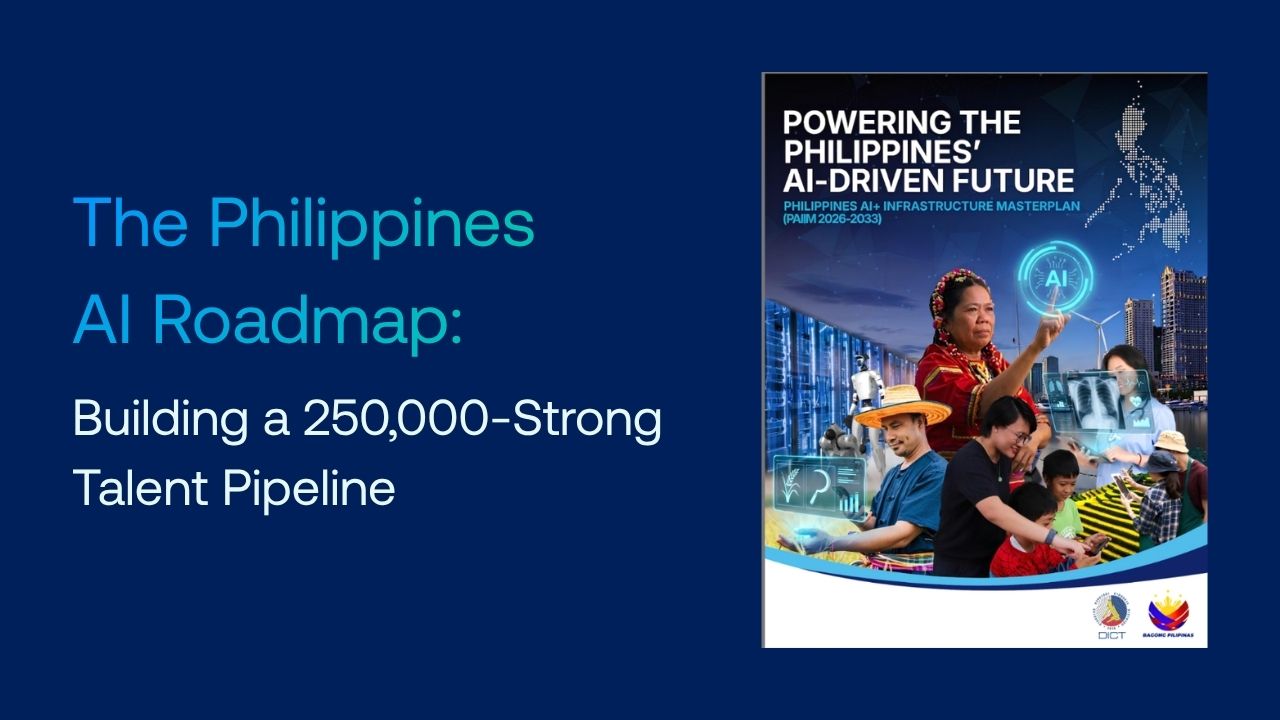
Through the Department of Information and Communications Technology (DICT), the national government plans to make the Philippines a regional AI hub with the Philippines AI+ Infrastructure Masterplan (PAIIM) 2026-2033.
To do this, it aims to invest in digital connectivity, AI computing infrastructure, data centers, sustainable energy, workforce development, and AI adoption. The roadmap aims to expand AI-ready data center capacity from about 50 MW today to 1.5 GW by 2033, create over 500,000 AI-related jobs, and train more than 1.3 million professionals.
Many headlines highlight the billions spent on infrastructure, but an equally important question is: Who will build, manage, secure, and get the most value from this AI infrastructure?
The key is having a ready workforce.
In this blog post, we share resources within the Lumify network to help you equip your teams with the technical, end-user, and leadership skills to be AI-ready.
IT and Cyber Security Skills are Essential in the Roadmap to AI
PAIIM recognizes that AI success requires more than just data centers and computing power. Workforce development is a core part of the plan, showing the need for AI skills in government, education, and industry. As they increasingly adopt AI technologies, they need professionals who can:
Design and implement AI-powered solutions.
Manage cloud and data infrastructure.
Protect systems against cyber threats.
Analyze and govern data responsibly.
Lead organizational change driven by emerging technologies.
Apply AI ethically and effectively in business operations.
This is where education and skills development organizations such as Lumify Work Philippines, Nexacu, ENS Negotiation Training and Plain English Foundation become critical enablers of the national AI agenda.
Developing Future-Ready Technology Professionals
Infrastructure alone is not enough.
As one of the region's leading ICT and digital skills training providers, Lumify Work Philippines (aka DDLS Aboitiz Inc.) plays a vital role in preparing Filipino professionals for the AI economy.
The technologies underpinning AI infrastructure are closely aligned with Lumify Work's training portfolio, including:
Cloud Computing Courses, such as Microsoft Azure and AWS Cloud Training
IT Service Management or Service Delivery Training, including ITIL® and ServiceNow courses
AI courses, including Microsoft AI and Copilot
Project and Program Management Training, including PRINCE2®
Cybersecurity Training like ISACA's Advanced in AI Security Management (AAISM™)
Data & Analytics Training, including Power BI and Python
IT Networking and Infrastructure Training, including Windows PowerShell
As organizations invest in AI platforms, they will need employees who understand cloud architecture, data governance, security frameworks, and how to implement AI.
Training and certification offer practical ways for people and teams to close these skill gaps.
Skills development is no longer simply a learning initiative. It is becoming a strategic investment that supports digital transformation and competitiveness.
Empowering the Everyday Workforce with End User Training
AI transformation is not limited to IT departments.
A big challenge for organizations is helping non-technical employees feel confident using AI tools. Nexacu’s technology productivity training is especially helpful here.
Many employees will interact with AI through familiar platforms such as:
Nexacu’s hands-on, workplace-focused training helps professionals build the digital skills they need to work with AI systems, not be disrupted by them.
Enhancing Communication Skills in the Age of AI
The country's roadmap to AI readiness highlights that AI readiness depends not only on infrastructure, but also on people. With plans to reskill more than 1.3 million professionals and create over 500,000 AI-related jobs, workforce capability is central to the country's AI ambitions.
As organisations adopt AI, employees need more than technical skills. They must communicate complex ideas clearly, collaborate effectively, and drive change across the business.
This is where the Plain English Foundation adds value by helping professionals develop the communication skills needed to succeed in an AI-powered workplace.
In particular, the Smarter AI Writing workshops help staff combine AI tools with professional writing skills, ensuring AI-generated content is clear, accurate, persuasive, and aligned with organizational standards.
Negotiation Training as Part of the AI Roadmap
The DTI AI roadmap stresses the importance of collaboration between government, industry, and technology stakeholders to deliver the country's AI ambitions. As major investments in digital infrastructure, AI adoption, and workforce development accelerate, the ability to negotiate effectively, align priorities, and build strong partnerships will be essential to success.
ENS International can help by strengthening negotiation and influence skills. Through negotiation training and coaching, government agencies and industry leaders can:
better manage complex projects;
secure stakeholders' buy-in;
and drive successful outcomes across AI, digital transformation, and public-private initiatives.
View the ENS Negotiation Training schedule here.
The DTI AI Roadmap: From Being Consumers to Creators
The Philippines has long been a global leader in customer experience, business process outsourcing, and digital services. PAIIM presents an opportunity to move further up the value chain.
By combining the following, the Philippines can evolve from primarily using AI technologies to becoming a creator, operator, and innovator within the regional AI ecosystem.
World-class AI infrastructure
Strategic government investment
Industry partnerships
Workforce development programs
Accessible training pathways
This transition requires coordinated investment in both technology and people.
Training providers such as Lumify Work Philippines, Nexacu, ENS Negotiation Training and Plain English Foundation are part of the Lumify network and ready to help teams through skilling.
Contact us to discuss a tailored program for your organization. Talk to our team to scope private training vs public training options to determine what suits you best. We also offer blended learning as another skills development option.