

Artificial intelligence has quickly shifted from being an experimental idea to something businesses now see as essential. Today, most organisations are not asking if AI will change their industry, but if they are ready to use it well and responsibly.
Even though many executives are excited about AI, organisations often struggle to turn that excitement into tangible results. Research shows that while most companies see AI as important, only a few have a clear strategy or strong governance for using it across the business.

This raises a key question for leaders: Is your organisation really ready to put AI into practice, or are you still just testing it?
If you are part of meetings discussing your organisation's AI readiness, looking at frameworks to determine your stage is probably top of mind. You may be wondering, 'How can I assess my business's readiness for AI implementation?'
The enterprise AI conversation has evolved dramatically over the past two years. Initially driven by excitement around generative AI, the discussion has now shifted toward governance, scalability, and business impact.
Today’s most common enterprise AI priorities include:
Generative AI integration across workflows
Responsible AI and governance frameworks
AI-driven productivity and automation
Data infrastructure modernisation
Workforce transformation and AI literacy
Security and regulatory compliance
However, many organisations encounter the same challenge: AI pilots succeed, but scaling them across the organisation proves difficult.
In most cases, the issue is not the technology itself. The issue is organisational readiness.
When it comes to your leadership team's AI readiness, check out this blog post on 'Executive AI Readiness: What Leaders Must Put in Place to Scale AI in 2026'.
The AI Implementation Readiness Framework
Before launching major AI initiatives, organisations should conduct an AI readiness assessment. This evaluates the maturity of critical capabilities required to deploy AI successfully across the enterprise.
Below is a simplified AI readiness model used by many AI transformation programmes.
Capability Area | Key Question | Indicators of AI Readiness |
|---|---|---|
Strategy | Does AI align with business goals? | Defined AI roadmap, executive sponsorship |
Data | Is your data usable for AI? | Clean, structured, accessible datasets |
Technology | Can your infrastructure support AI workloads? | Cloud platforms, GPUs, scalable compute |
Governance | Are risks and ethics managed? | Responsible AI policies, audit frameworks |
Talent & Skills | Do employees understand AI? | AI literacy, training programmes |
Culture | Is innovation encouraged? | Cross-functional experimentation |
Security & Compliance | Are AI systems safe and compliant? | Data privacy, model monitoring |
If one or more of these areas are underdeveloped, organisations can experience AI stagnation. This is where experimentation occurs, but enterprise-scale transformation does not.
Boston Consulting Group (BCG) found that across APAC, 78% of organisations have adopted AI. But only 57% are redesigning workflows to support it. This gap highlights why many AI initiatives fail to translate into meaningful business value.
Five Signs That Your Organisation’s AI Readiness is Low
Many organisations believe they are ready for AI adoption, but certain warning signs suggest otherwise.
1. AI Use Cases Are Not Linked to Business Value
AI projects often start as technical experiments rather than solutions to strategic problems.
Signs include:
AI pilots with no clear success metrics or ROI
Innovation teams that are disconnected from business units
No prioritised AI roadmap
Successful organisations start with high-impact use cases, such as:
Customer service automation
Fraud detection
Predictive maintenance
Supply chain optimisation
Personalised customer experiences
Explore how generative AI fits into everyday workflows with Microsoft AB-730T00: Transform Business Workflows with Generative AI.
2. Data Is Fragmented or Poorly Governed
What fuels AI systems? It’s high-quality data. Without reliable datasets, even the most sophisticated models fail.
Some common data challenges include:
Data silos across departments
Poor data quality
Lack of metadata or lineage
Inconsistent governance
Many organisations discover that data modernisation is the true starting point of AI transformation.
Addressing data fragmentation often requires aligning AI initiatives with existing platforms and infrastructure. The Microsoft AB-731T00 course helps leaders connect AI strategy to data environments and identify scalable opportunities.
3. AI Risks and Governance Are Not Defined
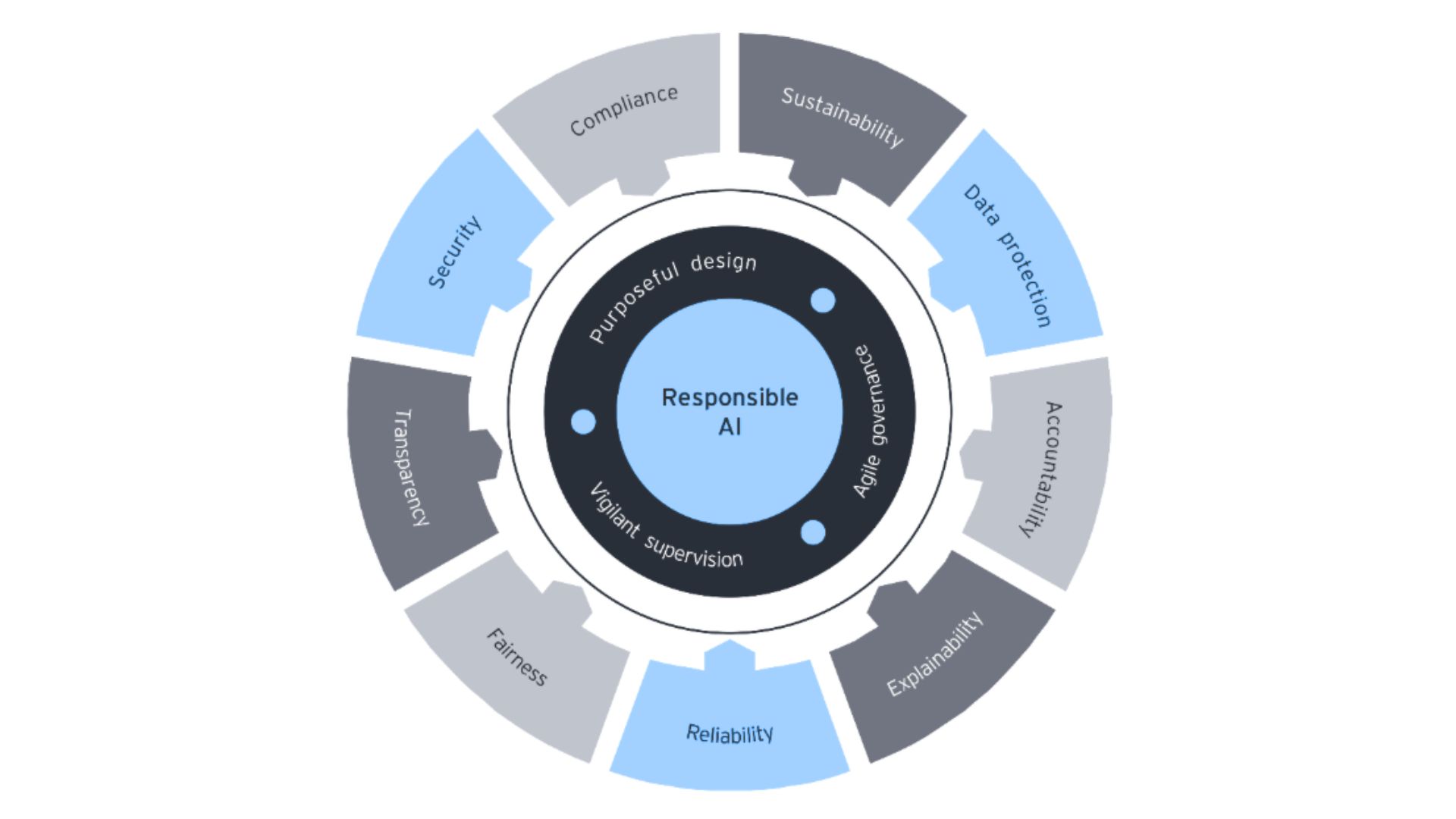
Responsible AI is now one of the most important topics in enterprise technology.
Organisations must manage risks related to:
Algorithmic bias
Explainability
Data privacy
Model reliability
Ethical use of AI
Modern governance frameworks focus on key principles such as:
Transparency
Accountability
Fairness
Security
Compliance
Without governance, AI initiatives may create legal, ethical, and reputational risks. The AI CERTs AI+ Chief AI Officer Practitioner course provides the frameworks needed to establish responsible AI policies and executive-level oversight.
More data from BCG found a mismatch. Across APAC, 77% of organisations are already experimenting with AI agents, but only 33% of employees say they properly understand them, highlighting a significant governance and risk management gap.
4. Leadership Alignment Is Missing
Successful AI programmes are rarely driven by a single department. They require collaboration across leadership roles, including:
Chief Executive Officer (CEO)
Chief Information Officer (CIO)
Chief Data Officer (CDO)
Chief Technology Officer (CTO)
Chief Risk Officer (CRO)
When these leaders are aligned, organisations can connect technology investments with measurable business outcomes. ‘From Pilot to Profit: A Leader’s Roadmap for Enterprise AI Strategy' is a good resource for this.
5. The Workforce Is Not Prepared
AI transformation is as much a people challenge as a technology challenge. Organisations must address:
AI literacy across all employees
Upskilling programmes
AI-human collaboration models
Change management strategies
Employees who understand how AI augments their work are far more likely to adopt it successfully. The AI CERTS AI+ Executive course equips leaders with the foundational knowledge needed to support adoption and guide their teams.
The AI Readiness Checklist
Before launching enterprise AI initiatives, leadership teams should ask the following questions.
Strategy
Do we have a documented AI roadmap?
Are AI initiatives tied to measurable business outcomes?
Data
Is our data centralised, governed, and accessible?
Do we have a clear data ownership structure?
Technology
Do we have scalable compute infrastructure?
Are our cloud and data platforms AI-ready?
Governance
Do we have responsible AI guidelines?
Are models monitored for bias and drift?
People
Do employees understand how AI will impact their work?
Do we provide structured AI training programmes?
Your Readiness and The Future of Enterprise AI
The next phase of AI adoption will be defined by operational integration rather than experimentation. We can see organisations moving toward:
AI embedded in everyday workflows
Autonomous AI agents assisting employees
AI-driven decision intelligence
Enterprise knowledge copilots
Fully integrated data and AI platforms
In this environment, AI will increasingly become part of the business's operating model, rather than a standalone innovation initiative. You can download our AI and Machine Learning brochure to explore learning pathways and certifications.
Final Thoughts on AI Readiness for Businesses
Where is your organisation in its AI journey? If you need AI readiness assessment consultants in Australia, New Zealand and the Philippines, you can use the AI Maturity Model by Lumify Group. This tool helps you identify the right AI learning solutions from Lumify Work and Nexacu at your current stage.
It is not necessarily the organisations with the most advanced algorithms that find AI success. They will be the ones who build the strongest foundation for implementation.
This strong AI foundation includes:
A clear AI strategy
Strong data infrastructures
Responsible AI governance
Skilled employees in AI and other disciplines
Leadership alignment on why, how and what to expect
Treating AI as a core business transformation initiative rather than as a technology project. This is where the real competitive advantage lies.
Question for leaders:
If your organisation conducted a full AI readiness assessment today, would the results show genuine preparedness or reveal critical gaps?
The answer to that question may determine your competitive position over the next decade.