

In the August 2026 episode of the iTnews podcast, Alex Caroly, First Assistant Secretary in Technology, Digital & Data at the Department of Veterans' Affairs, shares insights into the department's digital strategy and roadmap.
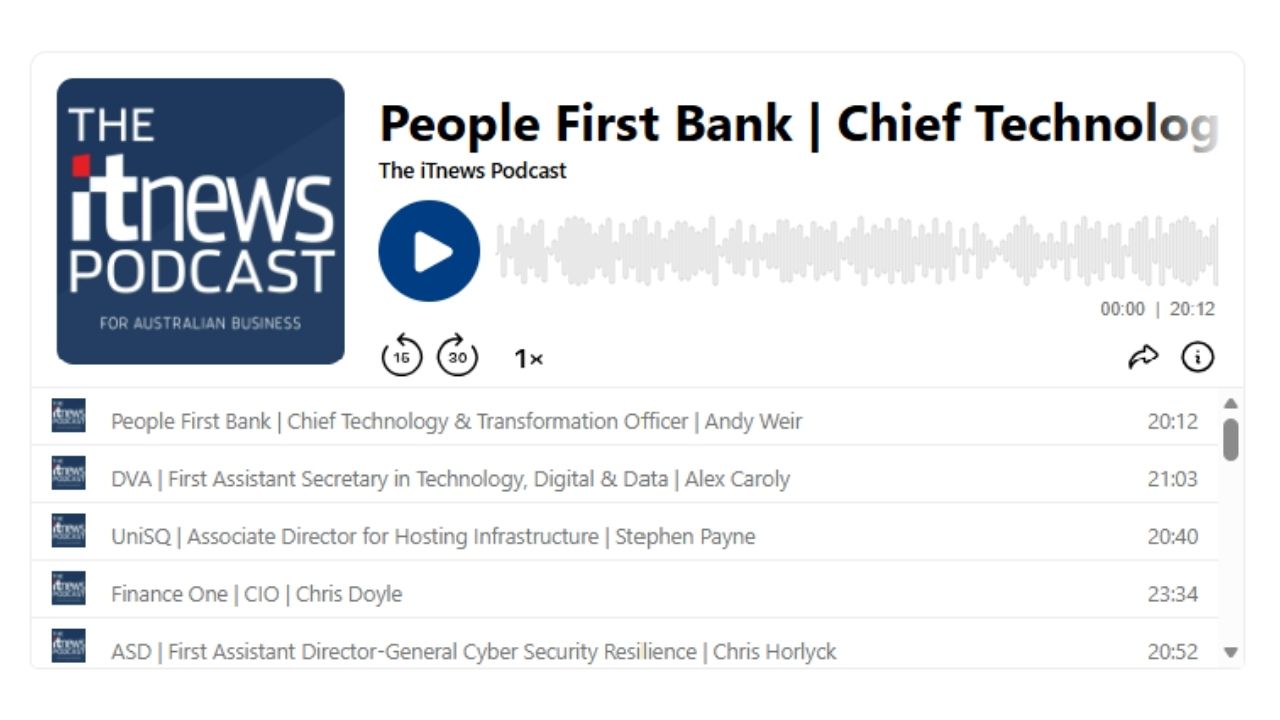
You can also hear from our technical instructor and ITIL Master, Iain Morrison. He discusses the challenges organisations face when building and implementing AI solutions and explains how PeopleCert's ITIL AI Governance helps create a thoughtful, balanced approach to adopting AI.
Read the rest of the conversation on ITIL and AI Governance below.
AI Governance Explained: Building Trust, Accountability and Innovation
Over the last three years, AI has evolved from a clever question-answer machine into a powerful business tool that can accelerate activity and amplify outcomes. But without the right scaffolding, the house AI builds can come tumbling down. Lumify's Iain Morrison says that getting AI right comes with three big challenges.
The Challenges with Getting AI Right
The three big challenges are trust and accountability, speed outpacing control, and balancing innovation with business value.
AI can analyse vast amounts of data, but AI doesn't understand the organisational context, corporate values, regulatory obligations, or the consequences of getting a decision wrong. It cannot accept accountability when things don't go as planned.
If an AI system recommends a change that causes a major outage, makes an incorrect decision, or generates advice that breaches compliance requirements, the responsibility rests with the organisation, and it rests with the organisation's leaders.
Employees and customers need confidence that there's always meaningful human oversight for decisions that carry significant business, legal, or ethical consequences.
In the age of AI, trust doesn't happen by accident. It is created through effective governance. AI is changing the speed at which organisations develop, deploy, and support digital services.
Tasks that would have taken days, weeks, or months can now be completed in minutes. But while this acceleration creates enormous opportunities for innovation and productivity, it also introduces a significant governance challenge. The faster an organisation moves towards AI, the greater the potential for mistakes to be introduced and amplified.
AI-powered decisions based on incomplete or biased data can quickly affect thousands of customers rather than a handful. AI can make decisions and execute actions at a speed and scale that traditional governance processes were never designed to manage. The organisations that succeed won't be the ones that move the fastest. They'll be the ones whose governance evolves just as quickly. The third challenge is balancing innovation with business value.
Organisations are under pressure to innovate, improve productivity, reduce costs, and enhance customer experience. However, AI is not a strategy in itself. Implementing AI without a clear understanding of desired outcomes can lead to fragmented solutions, duplicated investments, increased complexity, and disappointed stakeholders. In some cases, organisations automate inefficient processes, making core practices faster rather than making services better.
Organisations that realise the greatest benefit from AI will be those that remain focused on outcomes, customer value, and continual improvement.
Addressing AI Challenges through Governance
Addressing the three challenges of trust and accountability, speed outpacing control, and balancing innovation with business value requires a structured approach, as Ian explains:
The first step is establishing clear accountability. Responsibility for outcomes must always remain with the people.
The second step is embedding governance into the way work is done, rather than treating it as a checkpoint at the end of a project. Governance needs to be built into workflows from the outset.
A third priority is maintaining a relentless focus on business value. Every initiative should begin with a clear understanding of the outcome the organisation is trying to achieve.
AI models, business environments, customer expectations, and regulatory requirements will all continue to evolve. Organisations must embrace continual improvement. Addressing these challenges is about creating an environment where innovation and governance work together. Good governance gives organisations the confidence to move faster because they know they're heading in the right direction.
One of ITIL's greatest strengths is its emphasis on value co-creation. Idle recognises that every decision involves balancing value, risk, cost, and resources.
Another reason ITIL is so relevant is its emphasis on end-to-end service management. A chatbot, an automated workflow, or an AI-assisted service desk is only successful if it contributes positively to the complete customer journey. ITIL embeds a culture of continual improvement. AI models evolve, customers' expectations change, regulations develop, and new services emerge. AI cannot own outcomes.
Governance remains a human responsibility, and that's why ITIL matters more than ever. It provides the framework that turns AI into a trusted business capability. AI governance, when done well, isn't about care. It's the scaffolding that holds up trust, the quiet pulse behind ethical transformation, and the choreography that lets humans and machines move in sync.
Learn ITIL AI Governance with Lumify
Lumify Work is an Accredited Training Organisation with Platinum Partner status for PeopleCert courses and certifications, including ITIL courses. We help you prepare not only for your ITIL certification exams, but also to implement ITIL successfully within your organisation.
PeopleCert points out that traditional IT governance by itself cannot handle the unique risks and opportunities that come with AI. Access the AI Governance white paper to learn about the four important areas of governance that organisations need to focus on.
Book and sit the ITIL® AI Governance (Version 5) course. This standalone course and certification program helps organisations manage responsible AI adoption and scale AI responsibly by building practical capability in oversight, accountability, risk management, and trust.